
Whole person care Joint health
Understanding Ehlers-Danlos Syndrome: Beyond Flexible Joints
What EDS can involve, how it differs from everyday flexibility, and why diagnosis and care need an individual approach.
Counts are approximate. Interest is not a measure of clinical accuracy.
Some people have flexible joints without pain or injury. Others live with joints that repeatedly give way, persistent pain, or symptoms that interfere with everyday life. Flexibility alone does not explain that difference—and it does not establish a diagnosis of Ehlers-Danlos syndrome. The Ehlers-Danlos Society explains why joint movement and joint stability are different things.
What is Ehlers-Danlos syndrome?
Ehlers-Danlos syndromes, often shortened to EDS, are a group of heritable disorders affecting connective tissue. This tissue helps support structures throughout the body, including skin, ligaments, blood vessels, and organs. Different EDS types have different features and risks; there is no single experience shared by everyone with EDS. MedlinePlus Genetics
Hypermobile EDS, or hEDS, is the most common type. People may experience joint instability, pain, easy bruising, or fatigue. Some also have digestive problems or dizziness when standing. These symptoms vary and can have other causes, so they need assessment rather than being automatically attributed to EDS. NHS
Does being flexible mean I have EDS?
No. Joint hypermobility means a joint moves beyond its usual expected range. It can exist without a disorder.
When hypermobility causes problems, but another condition such as EDS does not explain them, a clinician may consider hypermobility spectrum disorder, or HSD. This is a meaningful diagnosis that can require ongoing care. The label alone does not tell you how much pain or difficulty someone experiences. The Ehlers-Danlos Society
How is EDS evaluated?
Evaluation brings together your symptoms, medical and family history, and a physical examination. A flexibility score is only part of that assessment. Clinicians also consider skin and tissue features and other possible explanations for the symptoms. The Ehlers-Danlos Society’s diagnostic guidance
Genetic testing can help confirm several EDS types when the clinical findings suggest them. There is currently no genetic test that confirms or rules out hEDS. Its diagnosis relies on clinical criteria and assessment for alternative conditions; a negative connective-tissue gene panel does not exclude it. GeneReviews
Children need an age-appropriate assessment. Current guidance uses a pediatric hypermobility framework from age five until biological maturity, rather than simply applying adult hEDS criteria. Other EDS types can still be investigated in childhood when indicated. The Ehlers-Danlos Society
What can supportive care involve?
Care is tailored to the EDS type, symptoms, and individual goals. For hEDS and HSD, physical therapy can focus on movement control, muscle strength, and joint stability. Activities should be adapted to the person’s abilities; repeatedly stretching already-mobile joints farther can increase instability. The Ehlers-Danlos Society’s physical therapy guidance
Depending on your needs, care may also include pain management, occupational therapy, selected supports or braces, and assessment of sleep, fatigue, or digestive symptoms. A coordinated plan can address several concerns without assuming they all have the same cause. GeneReviews
Why the type matters
Vascular EDS, or vEDS, is a distinct type associated with fragility of arteries and certain organs. Its risks should not be treated as the expected course of hEDS or every other EDS type. People diagnosed with vEDS need specialist guidance and an emergency plan. Sudden unexplained pain requires immediate medical assessment. GeneReviews: vascular EDS
Bring your questions to the conversation
For your visit, write down which symptoms affect daily life, when they began, any dislocations or repeated injuries, and relevant family diagnoses. Helpful questions include:
- Could hypermobility be contributing to my symptoms?
- What other explanations should we consider?
- Would physical therapy or a specialist assessment be useful?
- What activities and supports fit my situation?
You do not need to demonstrate extreme flexibility to explain your concerns. Your history, daily limitations, and goals deserve attention. Our first-visit guide can help you prepare for that conversation.
Information checked November 5, 2026. Diagnostic guidance is being updated; clinical assessment should use the current framework.
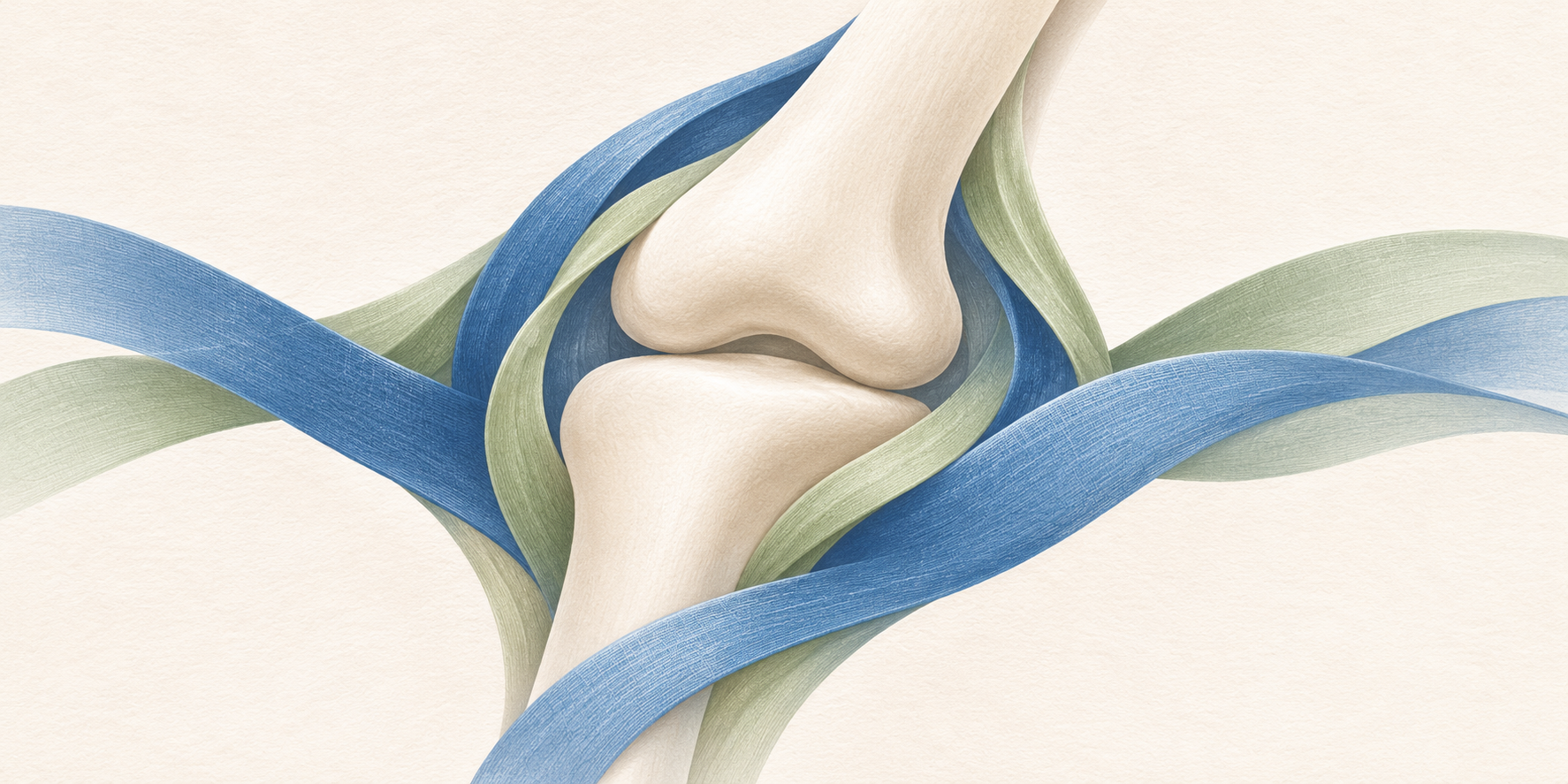
Illustration: a visual metaphor for connective tissue support, not a diagnostic image or a depiction of a specific EDS type.
References
- MedlinePlus Genetics: Ehlers-Danlos syndrome ↗
- NHS: Ehlers-Danlos syndromes ↗
- The Ehlers-Danlos Society: Diagnostic criteria ↗
- The Ehlers-Danlos Society: Hypermobility spectrum disorders ↗
- GeneReviews: Hypermobile Ehlers-Danlos Syndrome ↗
- The Ehlers-Danlos Society: Physical therapy ↗
- GeneReviews: Vascular Ehlers-Danlos Syndrome ↗
- The Ehlers-Danlos Society: Upcoming diagnostic update, November 3, 2026 ↗